Chemistry Nobel 2026 explained: why mirror-image molecules matter
Henri Kagan and Kenso Soai won the 2026 Nobel Prize in Chemistry for showing how reactions can favour one 'hand' of a molecule. Here is what they found and why it reaches far beyond the lab.
By John Christian Mmaduabuchi, Chief Editor
· 4 min read · Stockholm
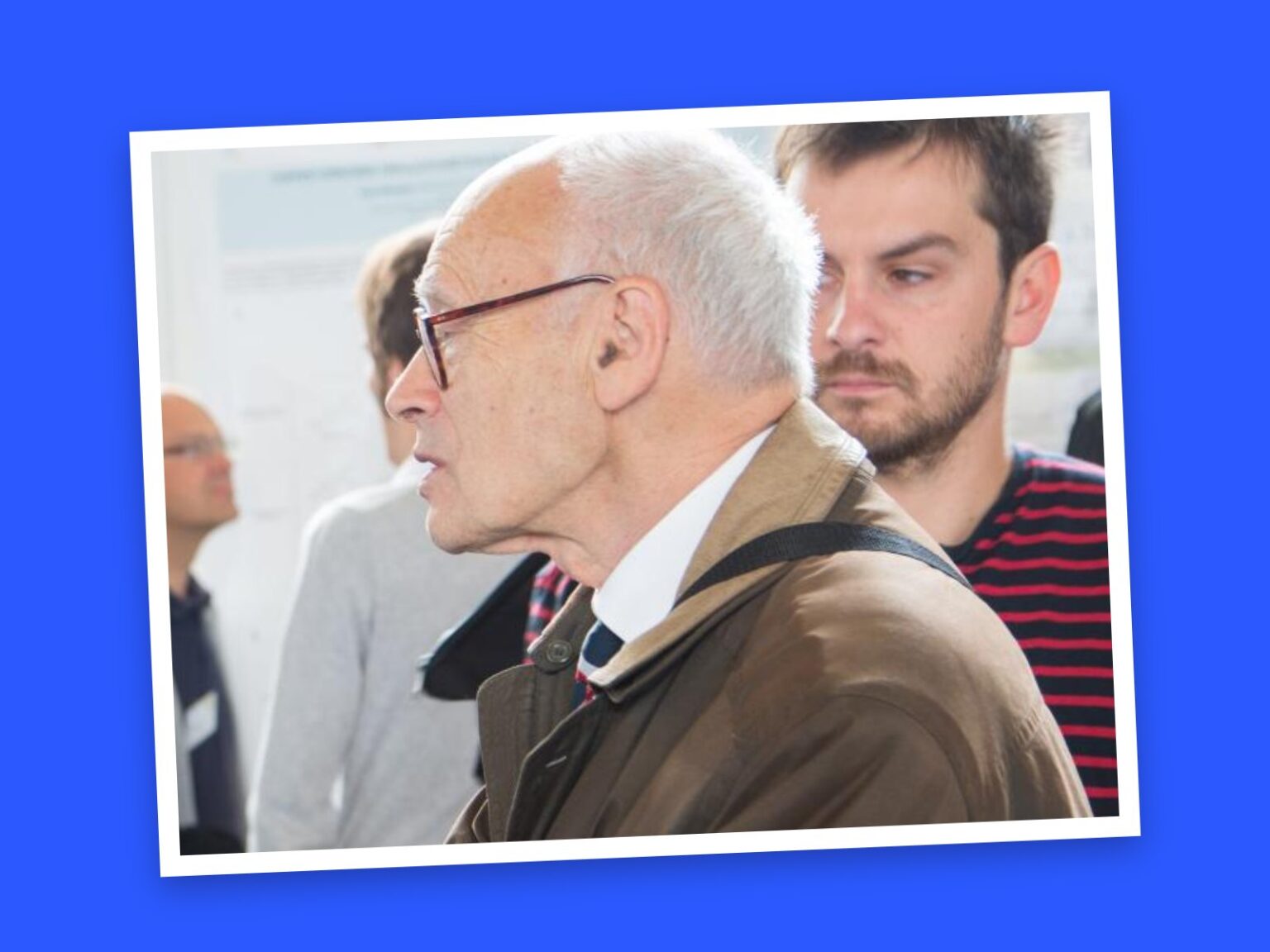
- Henri B. Kagan and Kenso Soai won the 2026 Nobel Prize in Chemistry, announced in Stockholm on Wednesday, 7 October 2026.
- Kagan discovered non-linear effects in 1986, and in 2003 Soai presented a self-copying reaction that ends up making almost only one mirror-image form of a molecule.
- The Royal Swedish Academy of Sciences says the discoveries have been decisive for chemists who design reactions for making pharmaceuticals.
The gist in 30 seconds
- Henri B. Kagan and Kenso Soai won the 2026 Nobel Prize in Chemistry, announced in Stockholm on Wednesday, 7 October 2026.
- Kagan discovered non-linear effects in 1986, and in 2003 Soai presented a self-copying reaction that ends up making almost only one mirror-image form of a molecule.
- The Royal Swedish Academy of Sciences says the discoveries have been decisive for chemists who design reactions for making pharmaceuticals.
Henri B. Kagan of France and Kenso Soai of Japan have won the 2026 Nobel Prize in Chemistry for discovering how chemical reactions can be steered to make just one of the two mirror-image forms of a molecule. The Royal Swedish Academy of Sciences announced the award in Stockholm on Wednesday, 7 October 2026.
The Academy honoured the pair “for the discovery of non-linear effects and autocatalysis in asymmetric organic synthesis”. They will share the prize of 12 million Swedish kronor, about $1.2 million, Reuters reported.
The work sounds abstract, but the Academy says producing the purest possible mirror-image form is vital for every company that makes substances meant to interact with living things, including pharmaceuticals, flavours, scents and agricultural chemicals. In other words, the chemistry reaches well beyond the laboratory.
“Henri Kagan and Kenso Soai have provided a solution to a chemical mystery that is over a century old: how homochirality can emerge spontaneously,” said Heiner Linke, chair of the Nobel Committee for Chemistry, in the Academy’s press release.
What is a mirror-image molecule?
Some molecules exist in two versions that are mirror images of each other but cannot be laid exactly on top of one another, like your left and right hands. Chemists call such molecules chiral.
Life favours one hand. According to the Academy, all amino acids come in two mirrored forms, yet only one of them is found in the proteins in our cells, and the same is true of the sugars in DNA. Chemists call this one-handedness “homochirality”, from the Greek words for “same” and “hand”.
The two forms can behave very differently. One form of carvone, a natural compound, smells of mint while its mirror image has a caraway note, the Associated Press (AP) reported. With many drug molecules, the Academy says, one form has the intended effect while the other can cause unnecessary and sometimes harmful side effects.
What did Kagan discover?
For a long time, reactions that could form both versions of a molecule gave chemists equal amounts of each. Chemists later learned to tilt reactions towards one form with a chiral catalyst, a substance that drives a reaction without being used up. They assumed the purity of the product would simply follow the purity of the catalyst.
Kagan, then at Université Paris-Sud, questioned that assumption. In 1986 he showed that a catalyst containing a mix of left- and right-handed parts could produce a larger excess of one form in the product than there was in the catalyst. This “non-linear effect” is now an important tool for chemists designing and fine-tuning reactions, the Academy says.
What is the Soai reaction?
Soai, at the Tokyo University of Science, built on Kagan’s discovery. In a 1995 paper he described a reaction whose product acts as its own catalyst, a process known as autocatalysis. Starting with a 2 per cent excess of one form, he finished with an 87 per cent excess.
In 2003 he went further. In what is now called the Soai reaction, a tiny excess of one form, produced by chance at the start, takes over the whole reaction and can make up 99.99 per cent of the product. “Other than life itself, no one had ever achieved this feat,” the Academy said.
“This is probably the coolest experiment in organic chemistry,” said Peter Somfai, a member of the Nobel Committee for Chemistry, AP reported.
How does it reach everyday products?
The Academy says the discoveries “have been decisive for chemists who design reactions for the manufacture of pharmaceuticals”. Rigoberto Hernandez, president of the American Chemical Society, went further: “The medicines we have today would not be possible without this chemistry,” he said, according to AP.
Somfai was more cautious about tracing specific products to the work. “It might be difficult to say that this drug, or that drug, was developed using this,” he said, AP reported.
Who are the winners?
Kagan was born in 1930 in Boulogne-Billancourt, France, and is professor emeritus at what was Université Paris-Sud. Soai was born in 1950 in Hiroshima, Japan, and is professor emeritus at the Tokyo University of Science, according to NobelPrize.org.
Soai was grocery shopping at a neighbourhood supermarket when he learned of the award, AP reported. “Of course, this is one of the most exciting days in my life,” he told the Nobel committee by phone.
What happens next
The Academy says researchers around the world are now trying to repeat Soai’s achievement with amino acids and sugars, the building blocks of life, in the hope of understanding how life’s one-handedness began. Soai said at a news conference in Tokyo that “there are still fascinating aspects that remain unknown”, according to AP.
This year’s Nobel announcements close on Monday, 12 October 2026 with the prize in economic sciences.
Sources
We checked this story against these sources. How we check
- NobelPrize.org: Press release: Nobel Prize in Chemistry 2026 (7 Oct 2026)
- NobelPrize.org: Popular information: They solved chemistry's asymmetric mystery (7 Oct 2026)
- AP via ABC News: Nobel Prize in chemistry awarded for research solving 'mirror image' mystery (7 Oct 2026)
- Reuters via Khaleej Times: Henri Kagan, Kenso Soai win 2026 Nobel chemistry prize (7 Oct 2026)
- Nobel Prize on YouTube: Announcement of the 2026 Nobel Prize in Chemistry (7 Oct 2026)
How does this story make you feel?

John Christian Mmaduabuchi is a Nigerian filmmaker, creative director, and media professional with extensive experience in digital storytelling, visual journalism, and contemporary media. His Journalism interests span Nigerian and African current affairs, entertainment, culture, technology, lifestyle, media, and the people shaping public conversation. With a background in film direction and documentary production, he brings a strong visual and narrative perspective to editorial work, with particular attention to context, clarity, and compelling storytelling. John is also a creative entrepreneur focused on storytelling, entertainment, culture, and digital content. His professional experience across directing, cinematography, editing, media strategy, and emerging AI technologies gives him a broad understanding of how stories are created, distributed, and consumed in the digital age. At GistMatrix, John contributes to the development and presentation of timely, engaging, and relevant stories for a contemporary audience. His approach to editorial work is grounded in accuracy, context, responsible storytelling, and a commitment to covering stories that matter.




Join the conversation
Be sharp, be kind. Comments are checked before they appear. We remove insults, hate, spam and personal details. Community rules