NEC’s 90-day cost-of-living plan: what we know and what it means for you
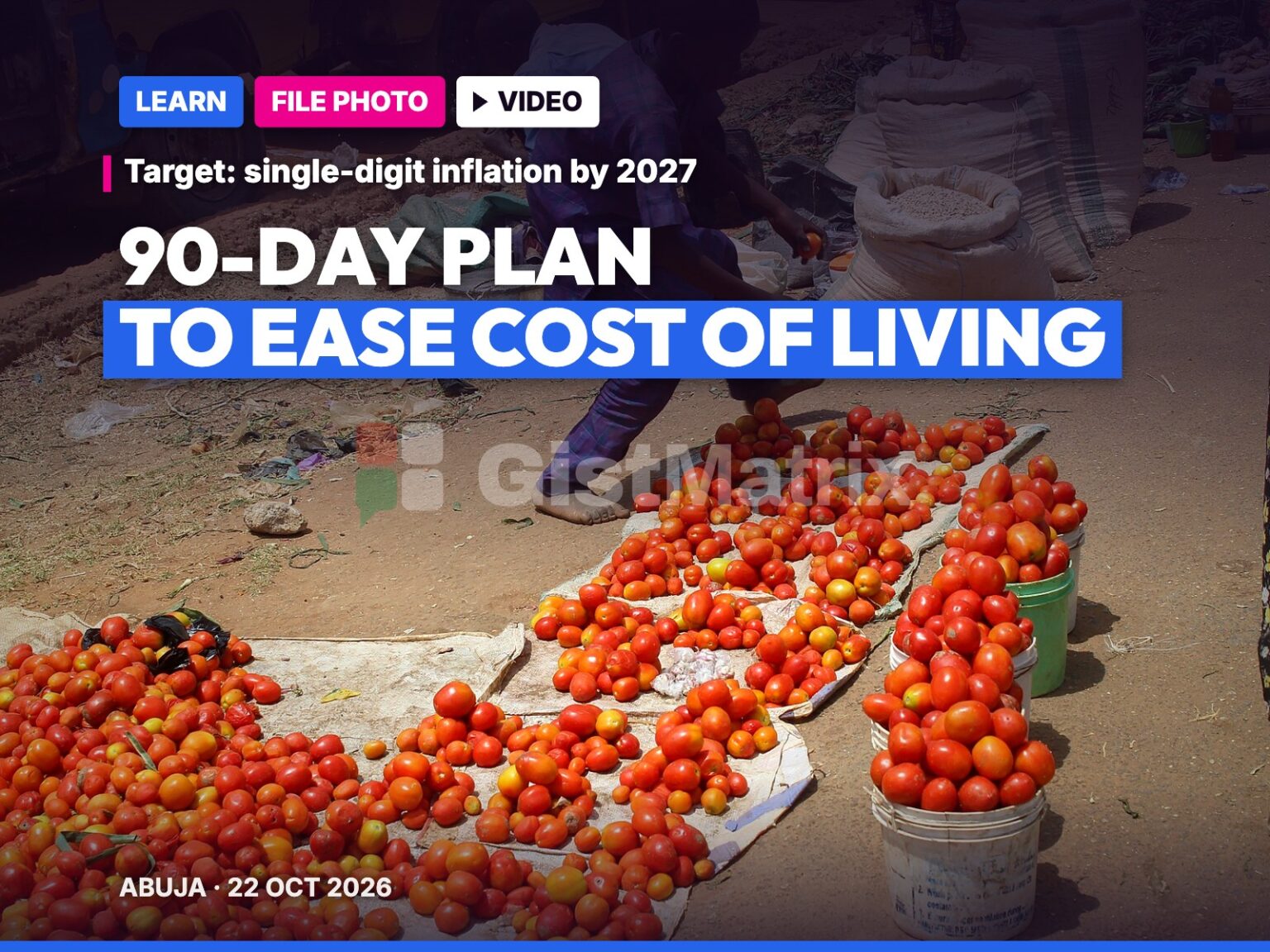
The council of governors endorsed a five-point plan on food, tax, projects, investment and household support, with single-digit inflation as a 2027 goal. Here is what is known.
By John Christian Mmaduabuchi, Chief Editor
· Video · Abuja
The gist in 30 seconds
- The National Economic Council endorsed the finance ministry's 90-day economic action plan at its 161st meeting on Thursday, 22 October 2026.
- The plan's five priority areas are food affordability, tax harmonisation, completion of high-impact projects, resolution of investment bottlenecks and regulated household support.
- Finance Minister Taiwo Oyedele named single-digit inflation and interest rates by 2027 as key goals; inflation was 14.63% in September and the CBN rate is 23%.
The National Economic Council (NEC), which brings together the Vice-President and the state governors, has endorsed a 90-day economic action plan from the Federal Ministry of Finance to bring down the cost of living. The council approved it at its 161st meeting, held virtually on Thursday, 22 October 2026 and chaired by Vice-President Kashim Shettima.
The Finance Minister and Coordinating Minister of the Economy, Taiwo Oyedele, presented the plan, according to a statement from the Vice-President’s spokesman, Stanley Nkwocha. Oyedele also named single-digit inflation and single-digit interest rates by 2027 as key goals.
Why does it matter to you?
Prices are still rising. Headline inflation was 14.63% in September, the National Bureau of Statistics (NBS) said on 15 October, and Oyedele told an audience in London on Wednesday that food inflation, at 19.6%, “remains too high”. The benchmark interest rate of the Central Bank of Nigeria (CBN), which guides what banks charge for loans, stands at 23%.
A plan aimed at food, transport and household support could reach your pocket sooner than longer-term reforms. So far, though, the government has published only its outline.
What is in the plan?
“The 90-day action plan identifies five priority areas: food affordability, tax harmonisation, completion of high-impact projects, resolution of investment bottlenecks and regulated household support,” the statement said.
It said the plan would focus on reducing the cost of living, improving food affordability, attracting investment and speeding up projects that bring direct benefits to Nigerians.
The council also approved a national dashboard to track projects across the federation, with an emphasis on accurate reporting of how the money saved from removing the petrol subsidy is being used.
What don’t we know yet?
A GistMatrix reading of the statement found no specific measures, budgets, targets or start date for the plan, a gap Premium Times also pointed out. The statement does not say which foods will be targeted, what “regulated household support” means, who will receive it, or how the results will be measured.
If the 90 days run from Thursday’s endorsement, the plan would end around 20 January 2027, by GistMatrix’s count.
What would single-digit inflation mean?
It means prices rising by less than 10% a year, not prices falling. At September’s headline rate of 14.63%, goods that cost ₦10,000 a year earlier cost about ₦11,463 on average. With single-digit inflation, the same goods would go up by less than ₦1,000 over a year.
Interest rates have further to fall. The CBN’s Monetary Policy Committee reset its benchmark rate at 23%, down from 26.5%, at its meeting on 21 and 22 September 2026, according to the bank’s published decisions. Reaching single digits would take a cut of more than 13 percentage points, which would usually feed through to cheaper loans for businesses and households.
What about transport fares?
The council agreed to set up a joint financing framework between the federal and state governments to speed up the rollout of compressed natural gas (CNG) and electric vehicles. The decision followed a presentation by Ismaeel Ahmed, chairman of the Presidential Initiative on Compressed Natural Gas and Electric Vehicles.
NEC directed that the programme must deliver lower transport costs, not just more vehicles, and told the relevant authorities to engage transport unions and operators so that the savings reach commuters as lower fares. A committee will be set up to coordinate the financing.
“The cost of reaching a livelihood should never consume the livelihood itself,” Shettima told the council.
What happens next
- The details: watch for the finance ministry to publish the measures, costs and timelines behind the five priorities.
- Transport: the committee on CNG and electric vehicle financing is still to be formed.
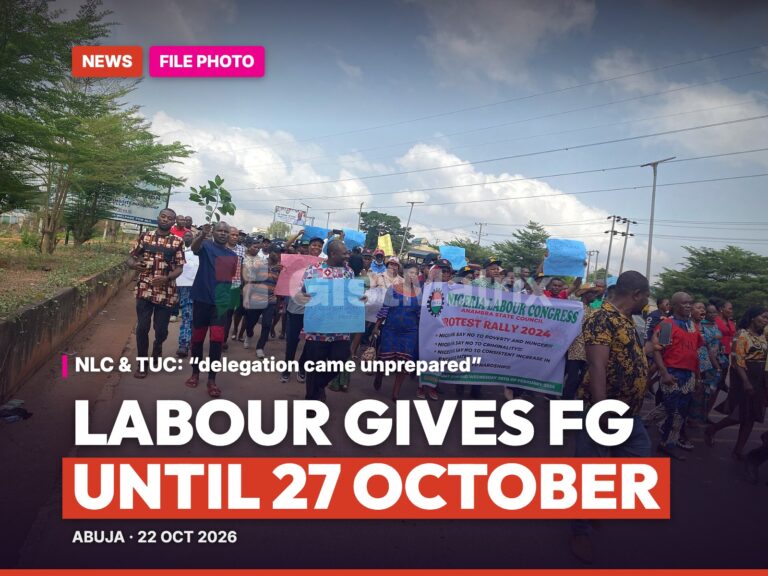
- Labour: the NLC and TUC meet the government again on Tuesday, 27 October, over petrol prices and the minimum wage.
- Prices: the NBS figures for October will show whether inflation is still slowing.
Has food or transport got cheaper where you live? Tell GistMatrix what you are paying now.
Sources
We checked this story against these sources. How we check
- Office of the Vice-President (Stanley Nkwocha): statement on NEC's 161st meeting (22 Oct 2026), full text published by Premium Times
- Channels Television: NEC Endorses 90-Day Economic Plan To Ease Cost Of Living For Nigerians (22 Oct 2026)
- TheCable: NEC endorses finance ministry’s 90-day action plan to improve food affordability, attract investment (23 Oct 2026)
- Central Bank of Nigeria: Key decisions of the Monetary Policy Committee, 21–22 September 2026 (accessed 23 Oct 2026)
- GistMatrix: Inflation falls to 14.63% in September as food prices drop month on month (16 Oct 2026)
- GistMatrix: Petrol subsidy ‘staying gone’, Oyedele says in London: what it means for you (22 Oct 2026)
How does this story make you feel?

John Christian Mmaduabuchi is a Nigerian filmmaker, creative director, and media professional with extensive experience in digital storytelling, visual journalism, and contemporary media. His Journalism interests span Nigerian and African current affairs, entertainment, culture, technology, lifestyle, media, and the people shaping public conversation. With a background in film direction and documentary production, he brings a strong visual and narrative perspective to editorial work, with particular attention to context, clarity, and compelling storytelling. John is also a creative entrepreneur focused on storytelling, entertainment, culture, and digital content. His professional experience across directing, cinematography, editing, media strategy, and emerging AI technologies gives him a broad understanding of how stories are created, distributed, and consumed in the digital age. At GistMatrix, John contributes to the development and presentation of timely, engaging, and relevant stories for a contemporary audience. His approach to editorial work is grounded in accuracy, context, responsible storytelling, and a commitment to covering stories that matter.


Join the conversation
Be sharp, be kind. Comments are checked before they appear. We remove insults, hate, spam and personal details. Community rules