NNPC petrol discount and ₦1,350 ceiling: what the FG’s fuel plan means for you
The FG will sell petrol at cost at NNPC stations for 30 days and is negotiating a ₦1,350 cap on landing costs. Here is how it works and what is still unclear.
By John Christian Mmaduabuchi, Chief Editor
· · Video · Abuja
Correction, 12 Oct 2026: An earlier version of this story said the NLC wants petrol prices brought back to their early-2024 level. Its communiqué asks for prices to return to what they were when the current national minimum wage was signed, in July 2024. We have corrected the story and its key points. All corrections
The gist in 30 seconds
- Finance Minister Taiwo Oyedele announced a 30-day petrol discount at NNPC stations, with priority for public transporters, in Abuja on Thursday, 8 October 2026. The Presidency has since described it as an extension of NNPC Retail's Independence anniversary discount.
- The government is negotiating a ₦1,350-per-litre ceiling on the landing cost of petrol, a cap on product cost rather than a pump price, to be reviewed monthly.
- The NLC has given the government two weeks from Friday, 9 October 2026, to cut petrol prices to their level when the current minimum wage was signed in July 2024, and to begin minimum wage talks.
Updated 09:20 WAT, 12 Oct 2026: The Presidency says the government’s 30-day discount is an extension of NNPC Retail’s Independence anniversary discount, funded from NNPC Retail’s own margin.
Updated 09:11 WAT, 10 Oct 2026: NNPC says its ₦66-a-litre petrol discount, introduced on 1 October, now runs until 31 October and is not a subsidy.
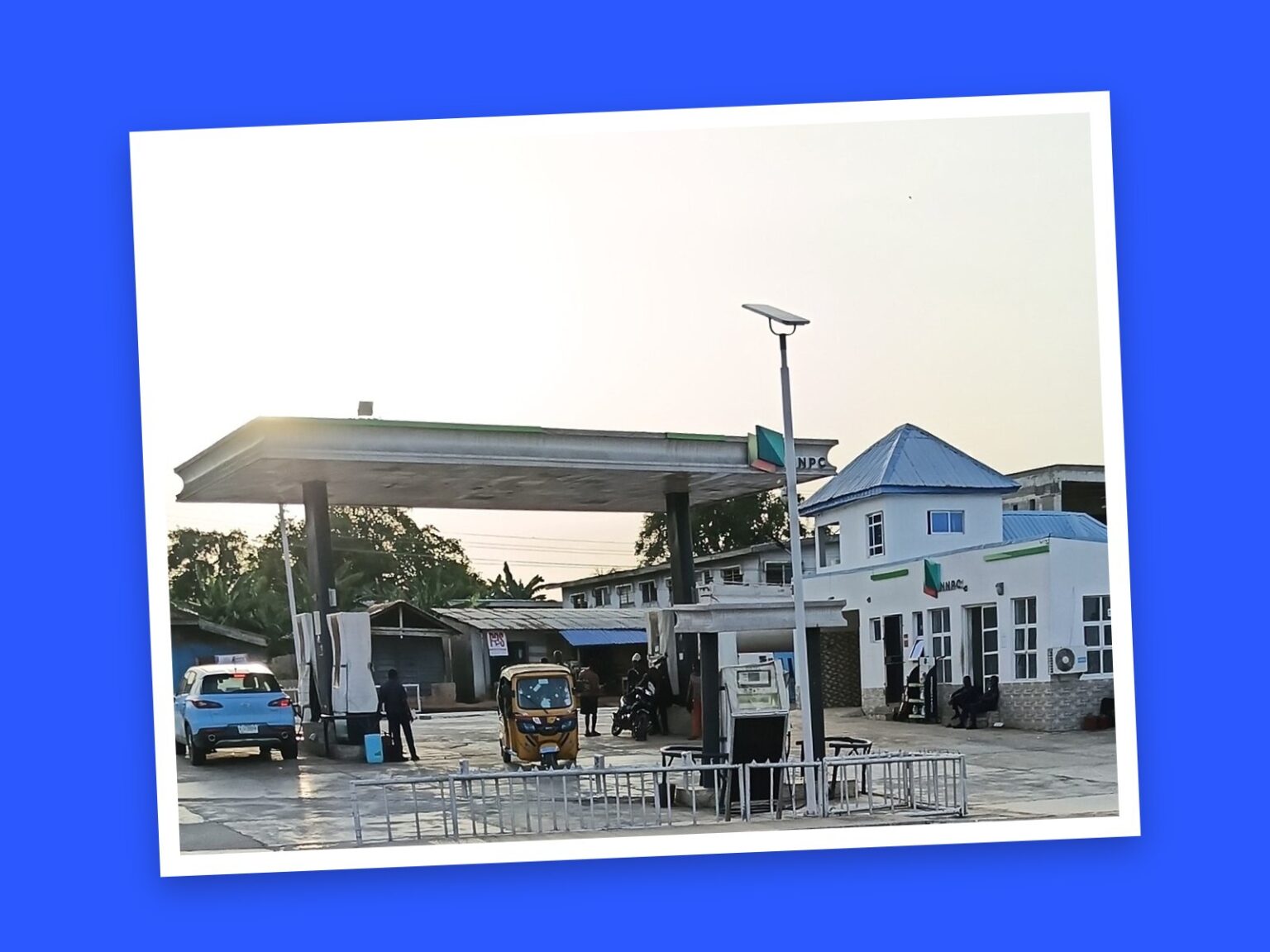
The Federal Government will offer a petrol discount at NNPC stations for 30 days, with public transporters first in line, Finance Minister Taiwo Oyedele announced at a press briefing in Abuja on Thursday, 8 October 2026. He also said the government is negotiating a ₦1,350-per-litre ceiling on the landing cost of petrol.
The measures are the government’s answer to pump prices of about ₦1,400 a litre and growing calls, including from organised labour, to bring back the fuel subsidy. Oyedele, who is also Coordinating Minister of the Economy, insisted that neither step is a return to subsidy.
What exactly did the government announce?
Oyedele set out a 10-point plan, THISDAY reported. The headline item is a discount on petrol sold at NNPC Limited filling stations “for the next 30 days in the first instance”, with priority for public transport operators nationwide.
He said the discount was not a subsidy. “So, it’s not a subsidy, the government is just saying we sell to you at cost,” he told reporters, according to The Guardian.
The other measures include forward sales of crude oil to domestic refineries at an agreed price for a set period, faster rollout of compressed natural gas (CNG) for transport, more money for cash transfers to vulnerable households and subsidised credit for small businesses. The government also plans a National Strategic Fuel Reserve, to be released under published rules during supply disruptions or hoarding, and will consider an excess profit tax on operators that take undue advantage of consumers, according to Premium Times and THISDAY.
What is the ₦1,350 ceiling, and is it a pump price?
No. The ceiling applies to the ex-gantry or landing cost of petrol, which is the cost of the product before transport, distribution and retail charges are added. Legit.ng noted that it is a cap on product cost, not a pump price.
When costs rise above ₦1,350, refiners and importers would absorb the difference and recover it later, when crude prices or the exchange rate are more favourable, Premium Times reported. The ceiling would be reviewed every month, with the figures published.
“Pump prices should not have to follow every swing in global crude or the exchange rate,” Oyedele said. He described the arrangement as “neither a subsidy nor a price control”.
How much will I save at NNPC stations?
NNPC Limited has now put a figure on its own discount. In a statement on Friday, 9 October, its Chief Corporate Communications Officer, Andy Odeh, said the company had introduced a ₦66-a-litre discount on 1 October, before the government’s announcement, to mark Nigeria’s 66th Independence anniversary. “This will now continue until 31 October 2026 across NNPC Retail stations nationwide,” he said, Daily Trust reported. Ripples Nigeria and The Sun also reported the new end date.
When NNPC launched the offer on 1 October, it applied to customers paying through the NNPC Fuel App and was due to end on 7 October, Legit.ng reported at the time.
NNPC said the discount does not establish a uniform national pump price or change the market-based framework for petrol prices, Daily Trust and The Sun reported.
The government has since linked the two. In a statement on Friday, 9 October, Oyedele addressed the funding of the discount introduced at NNPC Retail stations on 1 October. He said it comes only from NNPC Retail’s own retail margin, not from the federal budget or the Federation Account, Arise News and Nairametrics reported.
On Sunday, 11 October, Sunday Dare, the President’s Special Adviser on Media and Public Communications, wrote in a statement published by the Presidency that NNPC “had offered the discount to celebrate the 66th Independence anniversary” and “merely offered to extend the discount by another 30 days”. Neither statement gave a separate figure for a government discount. The only amount announced so far is NNPC’s ₦66 a litre.
NNPC’s latest price list, reported on Thursday, put petrol at ₦1,355 a litre in Lagos and Rivers and ₦1,370 in Abuja, according to The ICIR and Legit.ng. It was not clear from those reports whether the prices already reflected the discount.
Whether passengers feel any relief depends on fares coming down. Prof Wumi Iledare of the Emmanuel Egbogah Foundation told Daily Trust the government should disclose the discount per litre, the volumes involved and the fiscal cost. “I would call it a subsidy-equivalent risk unless the incidence is demonstrated otherwise,” he said.
Independent marketers also want a share. Chinedu Ukadike, National Publicity Secretary of the Independent Petroleum Marketers Association of Nigeria (IPMAN), told Daily Trust: “NNPCL should be giving us products at that same rate so that there will be no confusion.”
Why have petrol prices risen so much?
Oyedele blamed a global energy shock linked to the conflict in the Gulf, now in its eighth month. Brent crude is trading above $100 a barrel, almost 50% higher than before the conflict, and shipping through the Strait of Hormuz had fallen to about 13% of its pre-war level by mid-September, THISDAY and Premium Times reported.
Before the conflict, when crude was around $70 a barrel, Nigeria’s average petrol price was about ₦830 a litre, according to Premium Times.
Why won’t the government bring back the subsidy?
Oyedele argued that reinstating the subsidy would expose the government to open-ended costs and distort the foreign exchange market, THISDAY reported.
The Presidency also pushed back on headlines that described the discount as a subsidy. Bayo Onanuga, the President’s Special Adviser on Information and Strategy, said on X on Thursday that the measure is a margin discount at NNPC stations, not a return of the subsidy, Legit.ng reported.
NNPC made the same point in Friday’s statement. “This discount is a customer relief initiative and does not represent the reintroduction of petroleum subsidy,” Odeh said, according to Daily Trust.
How have labour and the opposition reacted?
The Nigeria Labour Congress (NLC) has given the government a two-week ultimatum, effective Friday, 9 October, to reduce the price of petrol “to what it was at the signing of the current national minimum wage in 2024” and to begin talks on a new national minimum wage before the end of October. The minimum wage law was signed in July 2024, Nairametrics noted. The communiqué, signed by NLC President Joe Ajaero after a joint meeting of the union’s National Executive Council and Central Working Committee, warned of “remedial steps” if the demands are not met, THISDAY reported.
Atiku Abubakar, the African Democratic Congress (ADC) presidential candidate, dismissed the discount as a temporary, election-driven measure. “What happens on Day 31?” he asked, according to THISDAY. The ADC Presidential Campaign Council called it a “one-month bribe”. The government’s position, set out by Oyedele and Onanuga, is that the measure is a discount, not a subsidy.
What happens next
NNPC says its ₦66 discount runs until Saturday, 31 October 2026. The Presidency now describes the government’s 30-day discount as an extension of that NNPC offer, and no separate government figure has been announced. The government has also promised to publish a monthly review of the ₦1,350 ceiling, and it has not said what will follow when the discount ends.
The NLC’s ultimatum runs for two weeks, from Friday, 9 October to Friday, 23 October. The government has also said it will work with the National Assembly on tax relief for low-income earners in the 2027 Finance Bill, THISDAY reported.
Sources
We checked this story against these sources. How we check
- Premium Times: FG to negotiate ₦1,350 petrol price ceiling as global oil shock drives pump prices (9 Oct 2026)
- THISDAY: Fuel Price: FG Offers 30-day Discount at NNPC Stations (9 Oct 2026)
- The Guardian Nigeria: FG Announces 30-Day Discount on Petrol Through NNPC stations (8 Oct 2026)
- The ICIR: FG proposes N1,350 petrol price ceiling, announces 30-day NNPC discount (8 Oct 2026)
- Vanguard: FG announces 30-day petrol discount for transporters at NNPC filling stations (8 Oct 2026)
- Legit.ng: Relief As FG Crashes Petrol Prices at NNPC Filling Stations, Gives Reason (8 Oct 2026)
- Legit.ng: Tinubu govt clarifies fuel discount at NNPC stations is not a subsidy return (8 Oct 2026)
- Daily Trust: Petrol discount or subsidy? (9 Oct 2026)
- Channels Television on YouTube: Finance Minister Holds Press Briefing On Fuel Prices & Subsidy Questions (Live, 8 Oct 2026)
- Daily Trust: NNPCL: We introduced fuel discount before FG's pronouncement (9 Oct 2026)
- Ripples Nigeria: NNPCL extends N66/litre petrol discount, insists it's not subsidy (9 Oct 2026)
- The Sun: Petrol discount not subsidy restoration, NNPC insists (10 Oct 2026)
- Legit.ng: NNPC Offers N66 Independence Day Discount on Petrol, Announces New Price (1 Oct 2026)
- Presidency Nigeria (State House): Atiku's demagoguery in the face of Tinubu's logical policies, by Sunday Dare (11 Oct 2026)
- Arise News: FG says NNPC petrol discount is not a fuel subsidy (9 Oct 2026)
How does this story make you feel?

John Christian Mmaduabuchi is a Nigerian filmmaker, creative director, and media professional with extensive experience in digital storytelling, visual journalism, and contemporary media. His Journalism interests span Nigerian and African current affairs, entertainment, culture, technology, lifestyle, media, and the people shaping public conversation. With a background in film direction and documentary production, he brings a strong visual and narrative perspective to editorial work, with particular attention to context, clarity, and compelling storytelling. John is also a creative entrepreneur focused on storytelling, entertainment, culture, and digital content. His professional experience across directing, cinematography, editing, media strategy, and emerging AI technologies gives him a broad understanding of how stories are created, distributed, and consumed in the digital age. At GistMatrix, John contributes to the development and presentation of timely, engaging, and relevant stories for a contemporary audience. His approach to editorial work is grounded in accuracy, context, responsible storytelling, and a commitment to covering stories that matter.