Inflation falls to 14.63% in September as food prices drop month on month
Headline inflation eased to 14.63% in September from 15.39% in August, the NBS said, as food prices fell month on month. Core and energy prices rose.
By John Christian Mmaduabuchi, Chief Editor
· Video · Abuja
The gist in 30 seconds
- Nigeria's headline inflation rate eased to 14.63% in September 2026 from 15.39% in August, the NBS said on Thursday, 15 October 2026.
- Average food prices fell by 1.55% between August and September, but annual food inflation was almost unchanged at 19.59%.
- Core inflation rose by 1.11% month on month in September, after the CBN cut its policy rate to 23% on 22 September 2026.
Nigeria’s headline inflation rate eased to 14.63% in September 2026, from 15.39% in August, the National Bureau of Statistics (NBS) said in its consumer price index report on Thursday, 15 October 2026, THISDAY, Premium Times and Nairametrics reported.
It is the fourth monthly fall in a row, according to Nairametrics and The Guardian, which said the rate is now at its lowest since the NBS changed the way it measures inflation in January 2025.
What does the new rate mean for you?
A lower inflation rate does not mean prices have come down. It means they are rising more slowly. On average, the goods and services the NBS tracks cost 14.63% more in September than a year earlier.
The bigger change was from one month to the next. The average price level rose by just 0.06% between August and September, compared with 0.71% between July and August, THISDAY and Nairametrics reported. Overall, prices barely moved in September.
Are food prices really falling?
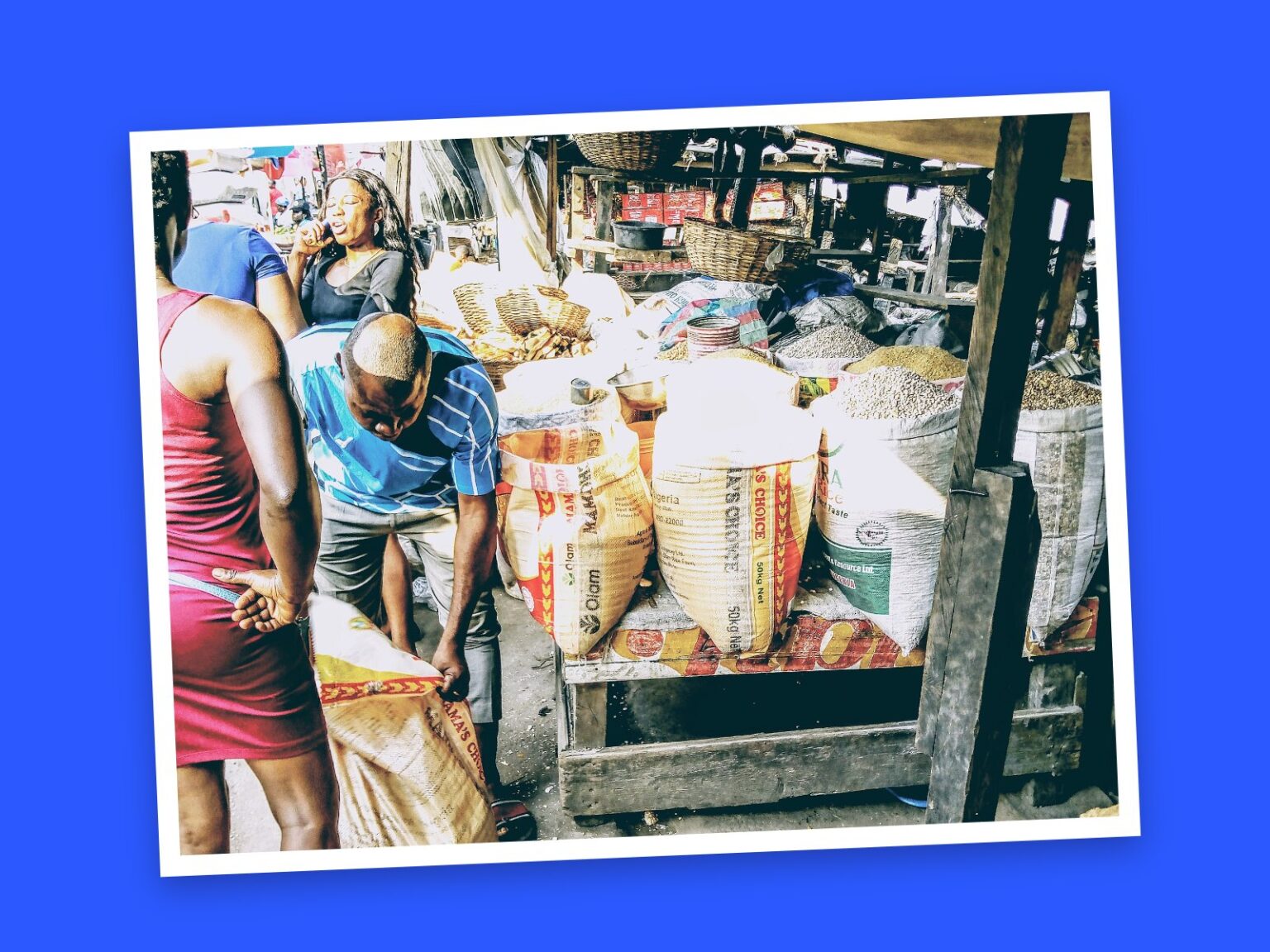
For the month, yes. Average food prices fell by 1.55% in September, after rising by 1.02% in August, according to the NBS figures reported by THISDAY and Nairametrics. The NBS linked the movement to items including maize flour, local rice, eggs, onions, palm oil, Irish potatoes, tomatoes and plantain, THISDAY reported.
Over the year, the picture is less rosy. Annual food inflation was 19.59% in September, almost unchanged from 19.57% in August, Premium Times and The Guardian reported. Food still costs nearly a fifth more than it did a year ago.
Lagos had the highest annual food inflation of any state, at 34.40%, followed by Imo at 33.79% and Ondo at 31.49%, The Guardian reported.
Why are some economists cautious?
Core inflation, which leaves out farm produce and energy, fell to 12.95% year on year from 13.29% in August. But on a monthly basis it rose by 1.11%, after a slight fall of 0.06% in August, THISDAY and The Guardian reported. Energy prices rose by 5.38% in the month, up from 0.36% in August, according to The Guardian.
Prices in towns and cities also rose faster, by 0.53% in the month compared with 0.28% in August, while rural prices fell by 0.89%, THISDAY reported. The paper said the easing was not broad-based across the consumer basket.
Dr Muda Yusuf, Chief Executive of the Centre for the Promotion of Private Enterprise (CPPE), called for further interest rate cuts and for targeted measures to improve food supply rather than continued reliance on tight monetary policy, The Guardian reported.
Which states have the highest and lowest inflation?
Imo recorded the highest annual headline rate, at 30.04%, followed by Enugu (22.38%) and Niger (22.05%), according to THISDAY. Taraba had the lowest, at 1.78%, followed by Bauchi (2.84%) and Adamawa (3.66%).
Annual inflation was 15.64% in urban areas and 12.46% in rural areas, Premium Times reported.
What happens next
These are the first inflation figures since the Central Bank of Nigeria (CBN) cut its Monetary Policy Rate by 3.5 percentage points to 23% at the Monetary Policy Committee’s meeting on 21 and 22 September, according to the CBN.
Zeine Ould Zeidane, Director of the IMF’s African Department, backed that decision at the IMF and World Bank annual meetings in Bangkok, Thailand. Nigeria had “made significant progress lowering inflation”, he said, adding: “This is the right thing to do.” He added that “it’s not easing yet because the stance itself remains a tight one”, Nairametrics reported.
The IMF has also warned the government against bringing back the petrol subsidy, as GistMatrix reported. The NBS publishes its inflation figures monthly, and the October report will show whether the jump in core and energy prices continues.
Sources
We checked this story against these sources. How we check
- THISDAY: Inflation Drops to 14.63% (16 Oct 2026)
- Nairametrics: Nigeria's inflation slows to 14.63% in September, fourth straight monthly decline in 2026 (15 Oct 2026)
- Premium Times: Nigeria's inflation eases to 14.63% in September (15 Oct 2026)
- The Guardian Nigeria: Nigerians hopeful lower inflation reflects in household spending relief (16 Oct 2026)
- Vanguard: Nigeria's inflation rate drops to 14.63% (15 Oct 2026)
- Nairametrics: Nigeria's food inflation drops for first time in six months to 19.57% (15 Sep 2026)
- Central Bank of Nigeria: Key Decisions of the Monetary Policy Committee, 21-22 September 2026 (22 Sep 2026)
- Nairametrics: CBN interest rate reset a "right move" - IMF (15 Oct 2026)
Have your say
Have food prices in your local market eased this month?
One tap to vote. You will see how everyone else voted.
How does this story make you feel?

John Christian Mmaduabuchi is a Nigerian filmmaker, creative director, and media professional with extensive experience in digital storytelling, visual journalism, and contemporary media. His Journalism interests span Nigerian and African current affairs, entertainment, culture, technology, lifestyle, media, and the people shaping public conversation. With a background in film direction and documentary production, he brings a strong visual and narrative perspective to editorial work, with particular attention to context, clarity, and compelling storytelling. John is also a creative entrepreneur focused on storytelling, entertainment, culture, and digital content. His professional experience across directing, cinematography, editing, media strategy, and emerging AI technologies gives him a broad understanding of how stories are created, distributed, and consumed in the digital age. At GistMatrix, John contributes to the development and presentation of timely, engaging, and relevant stories for a contemporary audience. His approach to editorial work is grounded in accuracy, context, responsible storytelling, and a commitment to covering stories that matter.



Join the conversation
Be sharp, be kind. Comments are checked before they appear. We remove insults, hate, spam and personal details. Community rules