Nigeria at 66: how 1 October 1960 came about, and why it still matters
As the country marks a low-key 66th anniversary on Thursday, here is the road from amalgamation to independence and the republic that followed.
By John Christian Mmaduabuchi, Chief Editor
· · 2 min read
- Britain merged the northern and southern protectorates on 1 January 1914
- Independence came at midnight on 30 September 1960, at the Lagos Race Course
- Nigeria became a republic on 1 October 1963, with Nnamdi Azikiwe as president
The gist in 30 seconds
- Britain merged the northern and southern protectorates on 1 January 1914
- Independence came at midnight on 30 September 1960, at the Lagos Race Course
- Nigeria became a republic on 1 October 1963, with Nnamdi Azikiwe as president
On Thursday, Nigeria turns 66. The Federal Government says this year’s celebration is low-key: prayers and a world press conference last week, then a public lecture on Wednesday and a nationwide broadcast by President Bola Tinubu on 1 October. Before the speeches begin, here is a quick refresher on how the day came to be.
The road to 1960
Modern Nigeria’s shape dates to 1 January 1914, when, on the recommendation of Sir Frederick Lugard, Britain amalgamated its northern and southern protectorates into the Colony and Protectorate of Nigeria, under a single governor-general based in Lagos.
In the decades that followed, a nationalist movement grew, with figures such as Herbert Macaulay and Nnamdi Azikiwe giving it a voice. After the Second World War, successive constitutions handed Nigerians more control. The Western and Eastern regions won internal self-government in 1957, and the Northern region followed in 1959. Abubakar Tafawa Balewa had become prime minister in 1957.
Midnight at the Race Course
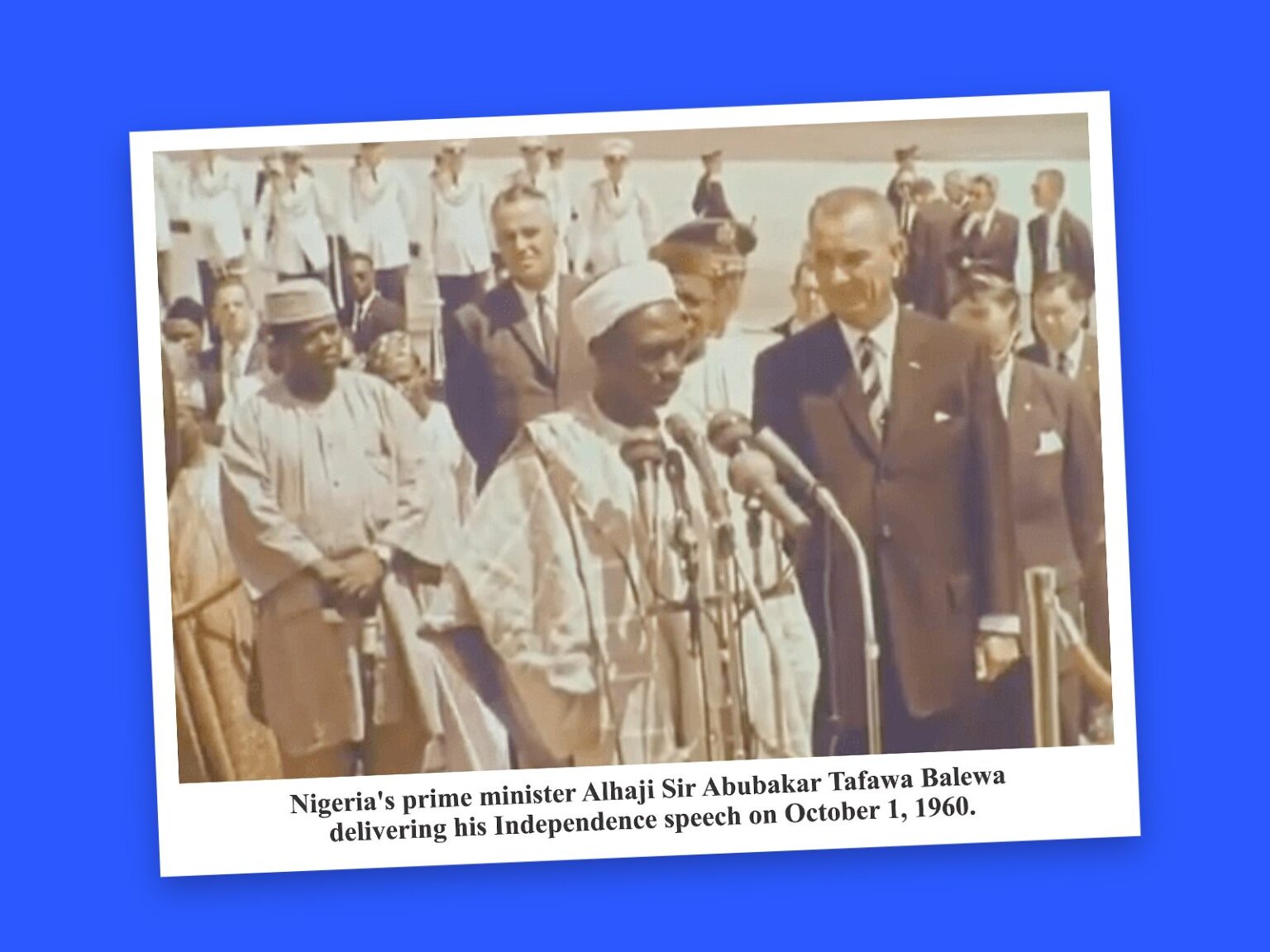
On the night of 30 September 1960, crowds gathered at the Lagos Race Course, now Tafawa Balewa Square. At midnight the floodlights dimmed, and when they came back up, the green-white-green flag designed by Taiwo Akinkunmi had replaced the Union Jack. Princess Alexandra of Kent represented Queen Elizabeth II and handed over the constitutional instruments of independence.
In his Independence Day speech, Balewa noted that freedom had come “without bitterness or bloodshed”, the product of years of negotiation rather than war.
The 1960 constitution created a federal system with an elected prime minister and a ceremonial head of state. Three years later, on 1 October 1963, Nigeria became a republic and Azikiwe became president, although Balewa, as prime minister, remained the more powerful figure. In August that year, the Mid-West Region was carved out of the Western Region, adding a fourth region to the federation.
Every 1 October invites the same question: how far has the country come? Even the government acknowledges the mood. In explaining why this year’s events would be modest, the Secretary to the Government of the Federation, George Akume, pointed to the country’s socio-economic challenges. Knowing the history helps you weigh this week’s speeches against the promise of 1960.
What next: The Independence Day public lecture holds on Wednesday, 30 September, followed by the President’s nationwide broadcast on Thursday, 1 October.
Sources
We checked this story against these sources. How we check
- Encyclopædia Britannica: Nigeria: Nigeria as a colony
- Encyclopædia Britannica: Nigeria: Independent Nigeria
- PBS: Commanding Heights: Nigeria – political history
- Vanguard: OCTOBER 1, 1960: How Nigerians ushered in independence
- TheCable: FLASHBACK: Tafawa Balewa’s 1960 Independence Day speech
- Vanguard: Tinubu to address Nigerians Oct 1 as FG unveils low-key independence celebration
- Channels Television: FG Plans ‘Low-Key’ 66th Independence Day Celebration
How does this story make you feel?

John Christian Mmaduabuchi is a Nigerian filmmaker, creative director, and media professional with extensive experience in digital storytelling, visual journalism, and contemporary media. His Journalism interests span Nigerian and African current affairs, entertainment, culture, technology, lifestyle, media, and the people shaping public conversation. With a background in film direction and documentary production, he brings a strong visual and narrative perspective to editorial work, with particular attention to context, clarity, and compelling storytelling. John is also a creative entrepreneur focused on storytelling, entertainment, culture, and digital content. His professional experience across directing, cinematography, editing, media strategy, and emerging AI technologies gives him a broad understanding of how stories are created, distributed, and consumed in the digital age. At GistMatrix, John contributes to the development and presentation of timely, engaging, and relevant stories for a contemporary audience. His approach to editorial work is grounded in accuracy, context, responsible storytelling, and a commitment to covering stories that matter.
Join the conversation
Be sharp, be kind. Comments are checked before they appear. We remove insults, hate, spam and personal details. Community rules