Nigeria at 66: how our history shapes the country today
As Nigeria turns 66, an opinion piece on how colonial rule, the civil war, military rule and oil still shape national identity, politics and everyday attitudes, and what the past can teach the next generation.
By Winifred .O., Publisher
· 13 min read
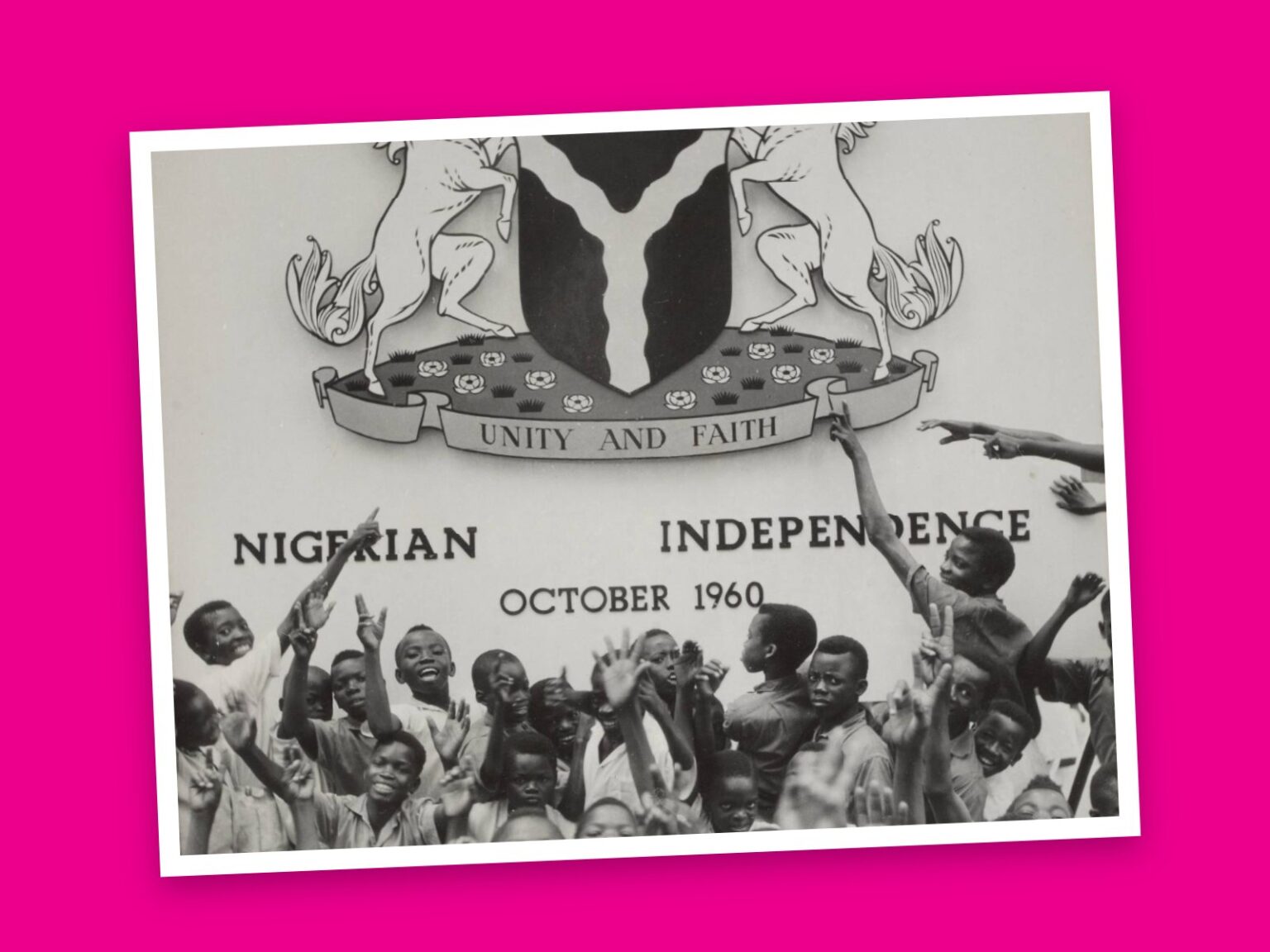
- Nigeria marks 66 years of independence on 1 October 2026; this opinion piece traces how its history still shapes the country.
- The writer argues that the 1914 amalgamation, the civil war, decades of military rule and oil dependence explain today's debates on identity, federalism and trust in government.
- The piece closes with lessons for future generations, from credible elections to economic diversification.
The gist in 30 seconds
- Nigeria marks 66 years of independence on 1 October 2026; this opinion piece traces how its history still shapes the country.
- The writer argues that the 1914 amalgamation, the civil war, decades of military rule and oil dependence explain today's debates on identity, federalism and trust in government.
- The piece closes with lessons for future generations, from credible elections to economic diversification.
Opinion | Nigeria at 66
Nigeria marks 66 years of independence today, 1 October 2026. From pre-colonial kingdoms to the Fourth Republic, the country’s past still shapes how Nigerians see one another, how they vote and what they expect from government. Here is how, and what that history could teach the next generation.
Historical Events That Shaped Nigeria
Pre-Colonial Foundations and Early Contact
Before colonialism, the territory that became Nigeria hosted sophisticated political systems: the Hausa city-states and the Sokoto Caliphate (founded 1804 after Usman dan Fodio’s jihad) in the north, the Oyo Empire and Yoruba city-states in the southwest, the Kingdom of Benin, and the largely decentralised, village-based Igbo societies in the southeast. The transatlantic slave trade (roughly 16th to 19th centuries) devastated many communities, and its abolition opened the door to missionary activity and “legitimate trade” in palm oil, which drew Britain deeper into the region.
Colonialism (1861-1960)
Conquest and amalgamation. Britain annexed Lagos in 1861, expanded through the Niger Delta and interior, and defeated the Sokoto Caliphate by 1903. In 1914, Governor-General Frederick Lugard amalgamated the Northern and Southern Protectorates into one colony. The merger served administrative and financial convenience, not the wishes of the peoples involved.
Indirect rule. Britain governed through existing emirs and chiefs, especially in the north. This worked as a cheap system, but it reinforced regional and ethnic divisions. The north remained largely closed to Western education and missionary work, while the south developed a Western-educated elite. That gap in education and political experience shaped the country’s politics for decades.
Economic extraction. The colonial economy was built around exports (palm oil, cocoa, groundnuts, cotton, later tin and oil) with infrastructure like railways designed to move goods to ports, not to integrate the country.
Resistance. Colonial rule met resistance throughout, including the Aba Women’s War of 1929, when thousands of Igbo women protested taxation and the abuses of warrant chiefs. It exposed the weaknesses of colonial administration and remains a landmark of women’s political agency.
The Independence Movement
Nationalism grew after World War I and accelerated after World War II. Key figures included Herbert Macaulay, often called the father of Nigerian nationalism, Nnamdi Azikiwe, Obafemi Awolowo, and Ahmadu Bello, who each built power bases in different regions. Successive constitutions (Richards 1946, Macpherson 1951, Lyttelton 1954) gradually devolved power and entrenched a federal structure with strong regions.
Nigeria became independent on 1 October 1960, and a republic in 1963. The independence bargain rested on a fragile regional balance: the North (Northern People’s Congress), the West (Action Group), and the East (NCNC) each dominated their own region, and this made national politics a contest of regional and ethnic blocs.
The First Republic and Its Collapse (1960-1966)
The early republic was undermined by census disputes, the crisis in the Western Region, and rigged elections. In January 1966, a group of mostly Igbo army officers staged a coup that killed the prime minister, Abubakar Tafawa Balewa, and several regional leaders. General Aguiyi-Ironsi took power, but his unitary decree alarmed northerners. A counter-coup in July 1966 followed, along with widespread massacres of Igbo people in the north, sending huge numbers of survivors back to the East.
The Civil War (1967-1970)
In May 1967, Lieutenant-Colonel Odumegwu Ojukwu declared the Eastern Region independent as the Republic of Biafra. The federal government, led by Yakubu Gowon, fought to keep the country together. The war lasted about 30 months and ended in January 1970 with Biafra’s surrender. Estimates of the dead range from about 500,000 to 3 million, many of them from starvation during the federal blockade. Gowon’s “no victor, no vanquished” policy and the programme of reconciliation, rehabilitation, and reconstruction aimed at healing, though many Igbo felt lasting marginalisation, and grievances persist today.
Military Rule and the Oil Era (1966-1999)
Military governments ruled for most of the period from 1966 to 1999, interrupted only by the Second Republic (1979-1983). Several developments defined these decades:
- The oil boom. Petroleum revenue transformed the economy in the 1970s but bred dependence, corruption, and neglect of agriculture. It also created bitter conflict over revenue sharing.
- State creation. Nigeria went from three regions (four from 1963) to 36 states, partly to dilute regional power blocs, but this also increased dependence on federal allocations.
- The June 12 crisis. Moshood Abiola was widely believed to have won the 12 June 1993 presidential election, which General Ibrahim Babangida’s military government annulled. The resulting turmoil brought in Sani Abacha’s repressive regime (1993-1998), which executed the writer and Ogoni activist Ken Saro-Wiwa in 1995 and made Nigeria an international pariah.
The Fourth Republic (1999-Present)
After Abacha’s sudden death in 1998, General Abdulsalami Abubakar oversaw a transition, and Olusegun Obasanjo was elected in 1999 under a new constitution. Since then Nigeria has had the longest unbroken civilian rule in its history. The 2015 election, in which an incumbent (Goodluck Jonathan) lost and conceded to Muhammadu Buhari, was a milestone for democratic maturity. Ongoing challenges include the Boko Haram insurgency in the northeast, Niger Delta militancy, banditry, farmer-herder conflict, electoral integrity, and widespread corruption.
How These Events Shaped National Identity and Governance
A contested national identity. The colonial amalgamation joined more than 250 ethnic groups without a shared political history. Nigerians often identify first with ethnicity, region, or religion, and national identity has had to be built deliberately, through symbols, the National Youth Service Corps (created after the war), and shared culture, from Nollywood to music and sport.
Federalism as a survival strategy. Fear of domination shaped a persistent tension between central power and regional or state autonomy. The “federal character” principle, which requires representation from all states in federal appointments, and informal power rotation between north and south reflect efforts to manage this.
The legacy of military rule. Decades of command-style governance weakened institutions, centralised power and resources in Abuja, and normalised patronage. Rebuilding civilian institutions remains unfinished work.
Resource politics. Oil concentrated revenue at the federal level, turning control of the state into a prize and fuelling grievances in producing regions like the Niger Delta.
Memory and unresolved grievances. The civil war, the June 12 annulment, and other episodes remain live in national debate, with continuing calls for restructuring, resource control, and inclusion.
Modern Societal Norms Influenced by History
Historical events and current norms
Ethnic and regional loyalty. Colonial indirect rule, regional politics in the First Republic, and the civil war taught many Nigerians to see politics as a contest between groups. Today, people often weigh a candidate’s origin and religion alongside their record, and informal zoning or rotation of top offices between north and south is widely expected.
Distrust of government. Decades of military rule, the annulled June 12 election, and oil-era corruption produced a lasting habit of scepticism toward officials. Many people rely on family, community, and religious networks instead of public institutions, and self-provision of water, power, and security is normal.
Patronage. Because the state controls oil revenue, and because military rule normalised personalised power, public office is often seen as a route to wealth and a duty to reward one’s own people. This shapes attitudes toward “settling” officials and toward sharing spoils.
Resilience and civic assertiveness. Struggles against colonial taxation, military rule, and later abuses fed a tradition of protest, from the Aba Women’s War to the June 12 movement to the 2020 #EndSARS protests.
Cultural heritage and tradition today
Nigeria’s 250-plus ethnic groups keep their languages, festivals, and institutions alive. Traditional rulers (emirs, obas, obis) still carry moral authority and mediate disputes, even without formal power. Festivals such as Osun-Osogbo, Argungu, and the New Yam festival sustain shared identity, and age-based respect, extended-family obligation, and communal events such as weddings and funerals remain central to social life.
Heritage is also a growing cultural export. Nollywood, Afrobeats, fashion (aso-oke, ankara, gele), and literature draw on tradition while reaching a global audience. Religion, both Christianity and Islam, blended with older practices, is a strong influence on daily morals and public debate.
Examples of history informing attitudes
- Federal character and quota thinking: Post-independence fear of domination makes fair regional representation a common test of legitimacy.
- “Never again” sensitivity around Biafra: The civil war makes secession talk emotionally charged and shapes how Nigerians handle ethnic tension in politics and online.
- Caution about military intervention: Memories of coups make most Nigerians strongly prefer civilian rule, despite frustration with its performance.
- Attitudes to education: The colonial north-south education gap still shows in literacy and school attendance, and it drives ongoing policy debates.
- Pride in origin, wariness of “the centre”: Many people identify first with their state or community and view Abuja with suspicion.
Takeaway
Modern Nigerian attitudes toward trust, identity, authority, and community are largely inherited responses to specific historical experiences. Understanding those roots explains much about how the country behaves today, and why change in governance and civic culture tends to be gradual.
Governance and Political Structures Rooted in History
Origins of governance structures
Pre-colonial systems. Nigeria’s peoples had varied political models: the centralised Sokoto Caliphate and Hausa emirates, the monarchical Oyo Empire and Benin Kingdom, and the decentralised, consensus-based Igbo societies. These traditions left different attitudes toward authority that still show up in regional politics.
Colonial design. The 1914 amalgamation created one state from separately administered territories. Indirect rule gave traditional rulers a formal place in administration, especially in the north, while the south developed elected, Western-educated leadership. Constitutions from 1946 to 1954 then hardened a regional federal structure.
Federal experiments. Independence began with three (later four) powerful regions, each dominated by one party and one major ethnic group. After the civil war, the military reorganised the country into states, reducing regional power and concentrating authority and revenue at the centre. The 1979 constitution adopted the American-style presidential system, and the 1999 constitution, drafted under military supervision, retained a strong federal government with 36 states.
Historical context and today’s political dynamics
- Strong centre, dependent states. Military centralisation and oil revenue mean most states rely on monthly federal allocations, which is why debates over restructuring, fiscal federalism, and state police persist.
- Zoning and power rotation. The PDP’s informal north-south rotation, and similar arrangements in other parties, come from the fear of domination that shaped the First Republic.
- Federal character. Written into the constitution to prevent exclusion, it shapes appointments and admissions but is also criticised for weakening merit.
- Political marketplace. Ethnic and religious identity remain useful for mobilising votes, and elite alliances often matter more than ideology.
- Fragile trust in elections. The rigged polls of the First Republic, the 1993 annulment, and later electoral disputes explain why reforms such as biometric voting and electronic result transmission draw such intense scrutiny.
- Security and grievance. Neglect in the Niger Delta, marginalisation narratives in the southeast, and northern underdevelopment feed insurgency, agitation, and banditry.
Historical figures and movements still shaping politics
- Herbert Macaulay founded the country’s first political party and set the template for nationalist organising.
- Nnamdi Azikiwe, Obafemi Awolowo, and Ahmadu Bello built the regional bases that became modern political blocs. Awolowo’s legacy of welfare policy and free education still guides Yoruba politics, Bello’s shapes northern political networks, and Azikiwe’s pan-Nigerian nationalism is invoked in the southeast.
- Tafawa Balewa is remembered as a symbol of consensus-driven leadership and its collapse.
- Gowon and Ojukwu define the civil war memory: reconciliation on one side, self-determination on the other.
- Abiola and the June 12 movement made democracy a mass demand, and June 12 is now Democracy Day, a national holiday.
- Ken Saro-Wiwa and the Ogoni struggle anchor environmental justice and resource control demands.
- Fela Kuti and the wider tradition of protest music continue to inspire civic activism, including #EndSARS.
- Funmilayo Ransome-Kuti and the Aba women link women’s activism to present calls for greater representation.
Takeaway
Nigeria’s political structure is the product of colonial engineering, military centralisation, and regional bargains never fully settled. Contemporary politics is largely a negotiation over the same questions raised at independence: how to share power, revenue, and opportunity among diverse groups within one state.
Lessons from the Past for Future Generations
Key lessons
Diversity needs deliberate management. The 1914 amalgamation joined peoples without building shared institutions or a shared story. The First Republic’s regional blocs and the civil war show what happens when groups feel excluded or threatened. Unity lasts when every group sees itself as a stakeholder, not when it is imposed.
Exclusion breeds conflict. The January and July 1966 coups, the Biafran secession, Niger Delta militancy, and insurgency in the northeast all grew partly from perceived neglect or marginalisation. Grievances left unaddressed tend to harden into violence.
Military rule is not a shortcut. Decades of coups and command governance weakened institutions, normalised corruption, and left the country poorer and less trusting. Civilian rule, even when frustrating, allows correction through elections, courts, and public pressure.
Resource dependence is a trap. The oil boom produced revenue but neglected agriculture and industry, and turned control of the state into a prize. Economies built on one commodity are fragile, and the fight over who controls it distorts politics.
Credible elections are the foundation of legitimacy. From the rigged polls of the 1960s to the June 12 annulment, disputed results have repeatedly led to instability. The peaceful handover in 2015 showed the reverse: trust grows when losers can accept outcomes.
Reconciliation must be substantive. “No victor, no vanquished” was a wise principle, but unequal follow-through left lingering grievances. Symbolic gestures without real inclusion do not heal.
Citizens matter. The Aba Women’s War, the June 12 movement, and #EndSARS show that organised public pressure can force change.
Informing current and future policy
- Fiscal federalism: Give states more revenue capacity and responsibility to reduce dependence on federal allocations and make governors accountable to their own voters.
- Diversify the economy: Invest in agriculture, manufacturing, technology, and creative industries so that oil price swings matter less.
- Inclusive governance: Keep federal character principles but pair them with merit-based standards, and address regional grievances early through dialogue and development spending, especially in the Niger Delta, southeast, and northeast.
- Strengthen electoral integrity: Protect the independence of the electoral body, ensure transparent result collation, and speed up adjudication of disputes.
- Security through trust: Community policing, reform of abusive units (the lesson of #EndSARS), and development in neglected areas address the roots of insecurity, not only the symptoms.
- Institutions over personalities: Build courts, anti-corruption bodies, and civil service systems that outlast individual leaders.
- Education and youth: Close the north-south education gap and create jobs, since a large young population is either the country’s biggest asset or its biggest risk.
- Civic education: Teach Nigerian history in schools, including the difficult chapters, so that citizens can engage with them honestly.
Why historical awareness matters
A society that forgets its history repeats its errors, and one that remembers only selectively inherits grievances without understanding them. Historical awareness helps citizens judge promises against past patterns, resist narratives that exploit old fears, and recognise that the country’s achievements, from independence to democratic consolidation, came through deliberate effort. It also builds empathy across groups by showing that every region has suffered and contributed. A better future is more likely when policy is made by people who understand how the present was produced.
Takeaway
Nigeria’s past offers a clear message: inclusion, credible institutions, economic diversification, and accountable civilian leadership are what hold a diverse country together. Knowing the history is the first step toward applying these lessons.
Sources
We checked this story against these sources. How we check
- GistMatrix: opinion and analysis by the writer (1 October 2026)
- Britannica: Nigerian Civil War (background on dates and death toll)



Join the conversation
Be sharp, be kind. Comments are checked before they appear. We remove insults, hate, spam and personal details. Community rules