Botswana at 60: how an exiled chief and a diamond find built a nation
As Botswana marks 60 years of independence today, here is how a protectorate once governed from South Africa became a diamond-powered democracy, and why economists compare it with Nigeria.
By John Christian Mmaduabuchi, Chief Editor
· · 5 min read
- Botswana marks 60 years of independence today, Wednesday 30 September 2026, with community-led celebrations across the country.
- At independence in 1966 it had just 12km of paved road and 22 university graduates, according to economists Acemoglu, Johnson and Robinson.
- Diamonds found at Orapa in 1967 powered decades of rapid growth, but a global slump shrank the economy in 2024 and 2025.
The gist in 30 seconds
- Botswana marks 60 years of independence today, Wednesday 30 September 2026, with community-led celebrations across the country.
- At independence in 1966 it had just 12km of paved road and 22 university graduates, according to economists Acemoglu, Johnson and Robinson.
- Diamonds found at Orapa in 1967 powered decades of rapid growth, but a global slump shrank the economy in 2024 and 2025.
Updated 10:42 WAT, 30 Sep 2026: Botswana is marking its 60th Independence Day today. This story has been updated.
Today, Wednesday 30 September 2026, marks 60 years of Botswana independence. The Diamond Jubilee is being celebrated across the country, from a crafts market and carnival in Gaborone’s Main Mall to festivals in Maun, Kang and Tsabong, after Independence Eve celebrations planned for Tuesday afternoon at stadiums in Gaborone and Francistown, the government-run Daily News reported.
Botswana is one of Africa’s most-cited success stories: a country that turned a diamond windfall into decades of growth without civil war. Economists have long set it beside Nigeria, and this Diamond Jubilee arrives as that diamond model faces a severe test.
The official theme is “Building Resilience, Driving Prosperity”, according to Botswana’s government-run Daily News. Tuesday also marked 78 years since the wedding that set the country’s founding father on his path.
How did Botswana get its independence?
Britain proclaimed the Bechuanaland Protectorate in 1885, Britannica records. For decades it was run from Mafeking, a town across the border in South Africa. The government only moved to a purpose-built capital, Gaborone, in 1965.
Local rulers fought to keep control. In 1895 three Tswana chiefs, Khama III, Sebele and Bathoen, travelled to London to resist Cecil Rhodes’s British South Africa Company, which wanted their land.
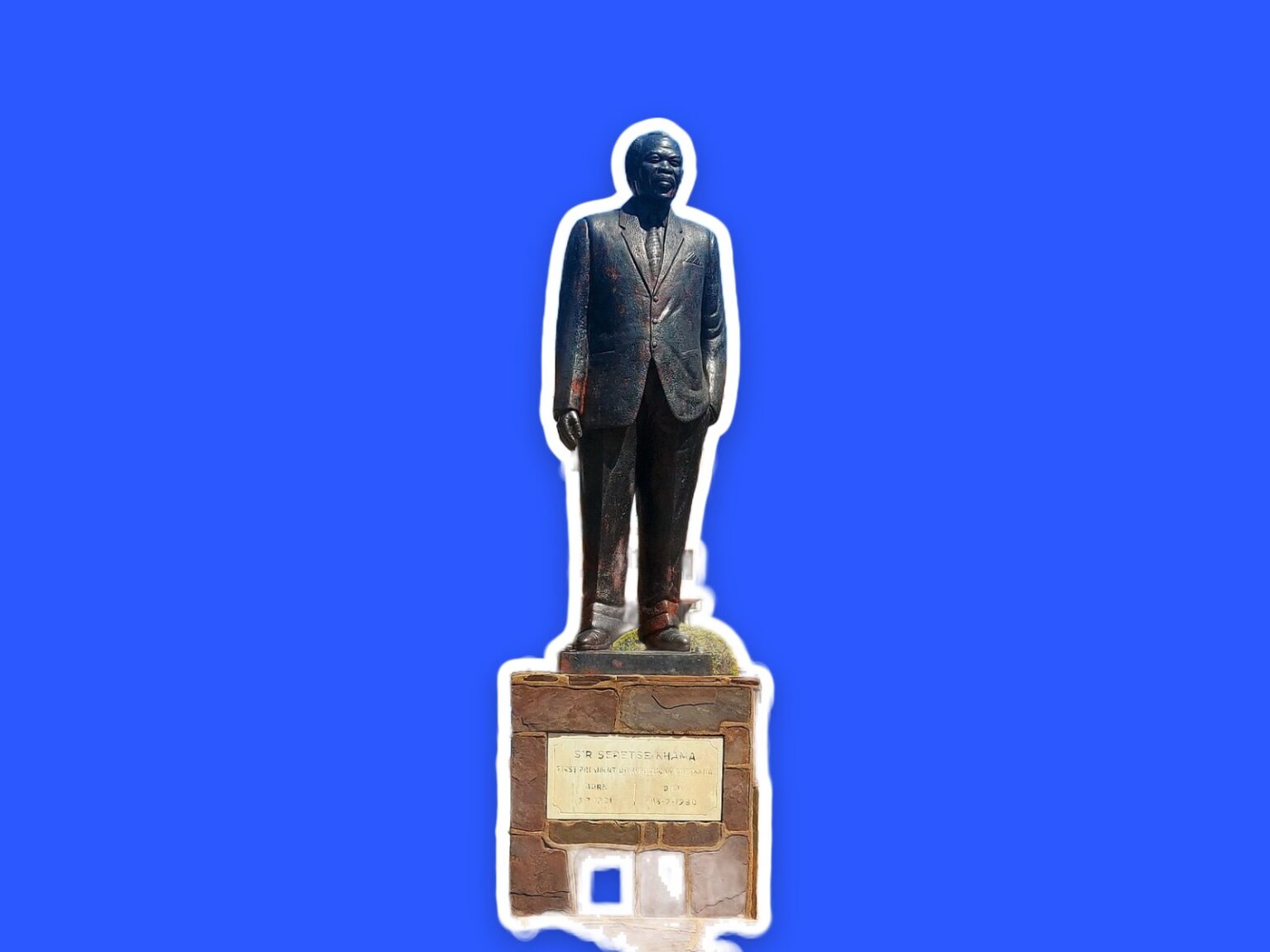
Khama III’s grandson, Seretse Khama, later shook the empire with a wedding. On 29 September 1948, the Oxford-educated heir married Ruth Williams, a white Englishwoman working as a clerk, at a London register office, according to the Inner Temple, where he trained as a lawyer.
Apartheid South Africa objected, and Britain barred Seretse from his homeland in 1950. He was allowed back in 1956 only after giving up his claim to the chieftaincy, Britannica and the Inner Temple note.
He then founded the Bechuanaland Democratic Party in 1962, won the 1965 election and became the first president when the Republic of Botswana was born on 30 September 1966.
Nigerian film fans may know the story from A United Kingdom, the 2016 drama directed by Amma Asante. British-Nigerian actor David Oyelowo plays Seretse, with Rosamund Pike as Ruth.
How poor was Botswana at independence?
Very poor. Britain had invested little during colonial rule. When it left, the country had 12 kilometres of paved road, 22 citizens with university degrees and 100 secondary school graduates, according to a widely cited study by economists Daron Acemoglu, Simon Johnson and James Robinson.
Then came the discovery that changed everything. Diamonds were found at Orapa in 1967, a year after independence, and the mine began producing in 1971, Britannica records. In 1969 the government and De Beers formed the joint venture now known as Debswana.
In 1975, once the mines’ value was clear, the government used a clause in its agreement with De Beers to renegotiate and secured half of the diamond profits, the study says. Later finds at Jwaneng added to the haul.
The payoff was dramatic. Botswana’s income per person grew by an average of 7.7% a year between 1965 and 1998, the fastest per-capita growth of any country over that period, the economists found. Diamond revenue paid for the roads, schools and hospitals of modern Botswana, the Daily News noted last week.
Why do economists compare Botswana with Nigeria?
The same study sets Botswana against resource-rich Angola, Congo, Sierra Leone and Nigeria. Unlike them, it notes, Botswana saw no civil war or intense infighting over control of its mineral revenue.
The authors credit good institutions that limited what elites could grab, many rooted in pre-colonial Tswana practice and left largely intact by light-touch British rule. Diamond wealth and sound decisions by post-independence leaders did the rest.
Democracy has held too. Seretse’s party ruled for 58 years until it lost the October 2024 election to Duma Boko’s Umbrella for Democratic Change. According to Al Jazeera, outgoing president Mokgweetsi Masisi conceded, saying: “We got it wrong big time in the eyes of the people.”
Is Botswana’s diamond success story over?
The jubilee comes at a hard moment. Lab-grown diamonds and weak demand have hit sales, and the economy shrank in both 2024 and 2025, according to IMF figures reported by Mining Weekly and later data cited by the Christian Science Monitor.
The strain shows in the celebrations. Mmegi reports that foot-and-mouth disease restrictions have halted the usual cattle slaughter for community feasts in Gaborone. The government has also declined to back a joint bid to co-host AFCON 2028, citing financial constraints, EWN reported.
There are signs of recovery. The finance ministry now expects a 2026–27 budget deficit of P9.3bn, or 3.1% of GDP, down from 8.9% projected in February, Mmegi reported on Monday. A 10-year sales deal signed with De Beers in 2025 also extended Debswana’s mining licences to 2054, Anglo American said.
What happens next
Rather than one grand parade, the government has opted for community-led celebrations, and set aside P23 million for the Diamond Jubilee programme, the Daily News reported in July.
Nigeria marks its own 66th anniversary a day later, on 1 October. Read how 1 October 1960 came about, or dig deeper into Botswana’s past with Britannica’s history of Botswana.
Botswana proved that a small, poor country could turn a lucky find into lasting progress. Its next 60 years depend on doing it again without leaning so heavily on the stones.
Sources
We checked this story against these sources. How we check
- Botswana Daily News (government): Botswana roars back to life 60 (22 Sep 2026)
- Botswana Daily News via allAfrica: Navigating Botswana Economic Evolution (24 Sep 2026)
- Mmegi: Deficit narrows sharply as economy finds its footing (Lewanika Timothy, 28 Sep 2026)
- Streamlinefeed: Botswana slashes budget deficit forecast as diamond revenues rebound (28 Sep 2026)
- Mmegi: FMD dampens Gaborone independence celebrations (23 Sep 2026)
- EWN: Botswana pulls out of joint 2028 AFCON bid (29 Sep 2026)
- Mmegi Online homepage: Govt refuses to back 2028 AFCON bid (28 Sep 2026)
- Britannica: History of Botswana
- Britannica: Seretse Khama
- Britannica: Gaborone
- The Inner Temple: The 'Unfortunate Marriage' of Seretse Khama
- Wikipedia: Ruth Williams Khama
- Acemoglu, Johnson & Robinson (MIT): An African Success Story: Botswana (2001)
- BFI: A United Kingdom (2016)
- Wikipedia: David Oyelowo
How does this story make you feel?

John Christian Mmaduabuchi is a Nigerian filmmaker, creative director, and media professional with extensive experience in digital storytelling, visual journalism, and contemporary media. His Journalism interests span Nigerian and African current affairs, entertainment, culture, technology, lifestyle, media, and the people shaping public conversation. With a background in film direction and documentary production, he brings a strong visual and narrative perspective to editorial work, with particular attention to context, clarity, and compelling storytelling. John is also a creative entrepreneur focused on storytelling, entertainment, culture, and digital content. His professional experience across directing, cinematography, editing, media strategy, and emerging AI technologies gives him a broad understanding of how stories are created, distributed, and consumed in the digital age. At GistMatrix, John contributes to the development and presentation of timely, engaging, and relevant stories for a contemporary audience. His approach to editorial work is grounded in accuracy, context, responsible storytelling, and a commitment to covering stories that matter.