Fitch lifts Nigeria’s outlook to positive: what it means for you
Fitch kept Nigeria's credit rating at B but changed its outlook to positive on Friday, citing reserves of $54.9bn and easing inflation. Here is what the move means and what could come next.
By John Christian Mmaduabuchi, Chief Editor
· 4 min read · Abuja
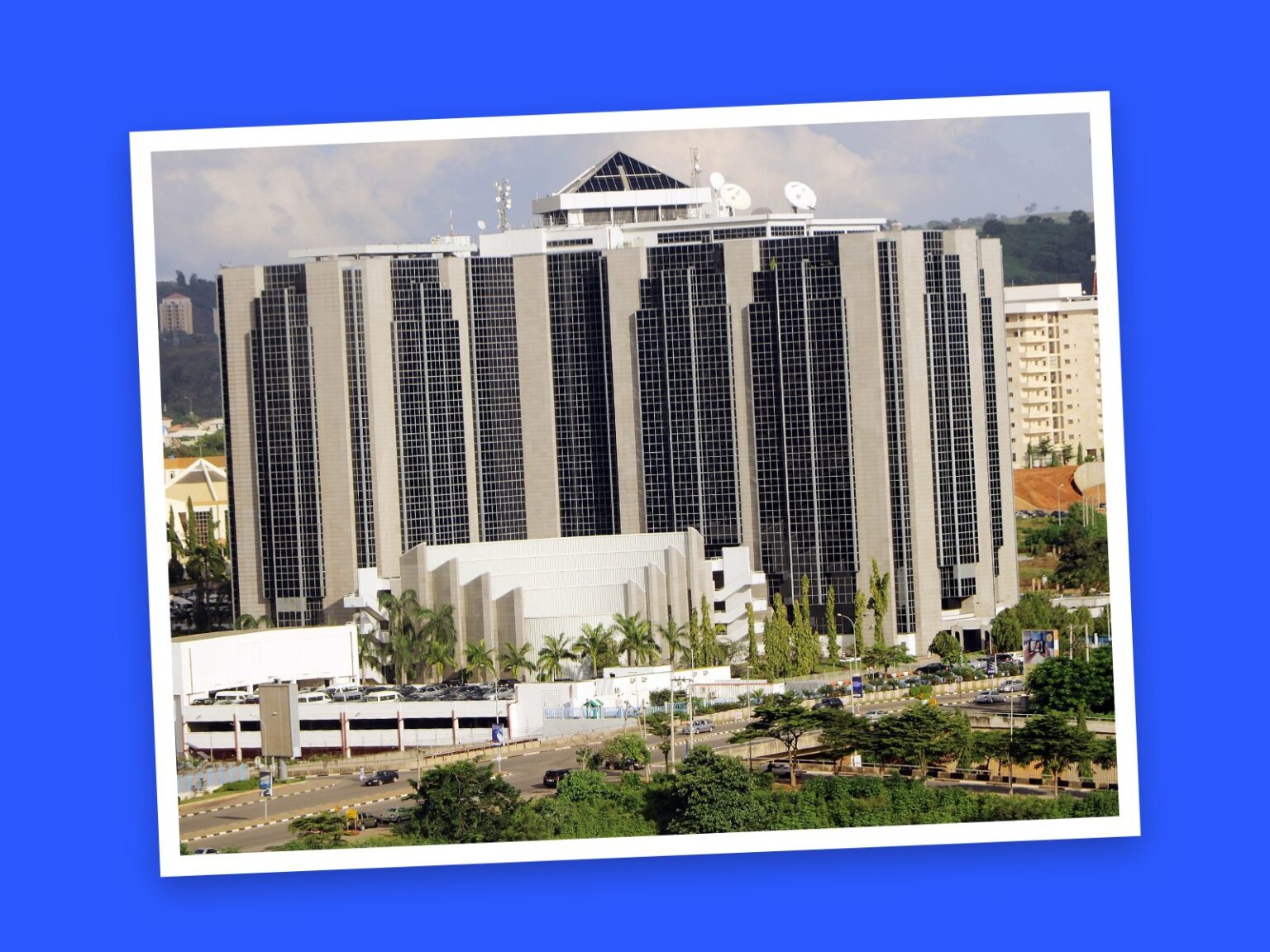
- Fitch Ratings revised Nigeria's outlook to positive from stable and kept its long-term foreign-currency rating at 'B' on Friday, 9 October 2026.
- The agency cited gross foreign reserves of $54.9 billion on 25 September 2026 and forecast average inflation of 15.4% in 2026.
- Finance Minister Taiwo Oyedele said on Saturday, 10 October 2026, that the government is working towards investment-grade status.
The gist in 30 seconds
- Fitch Ratings revised Nigeria's outlook to positive from stable and kept its long-term foreign-currency rating at 'B' on Friday, 9 October 2026.
- The agency cited gross foreign reserves of $54.9 billion on 25 September 2026 and forecast average inflation of 15.4% in 2026.
- Finance Minister Taiwo Oyedele said on Saturday, 10 October 2026, that the government is working towards investment-grade status.
Global ratings agency Fitch Ratings has revised Nigeria’s credit outlook to positive from stable, while keeping the country’s long-term foreign-currency rating at ‘B’. The decision, announced on Friday, 9 October 2026, pointed to stronger foreign reserves, easing inflation and growing confidence that economic reforms will continue, TheCable and Premium Times reported.
The rating itself has not changed, but the outlook tells lenders and investors which way it could move next. “A positive outlook signals that the rating could be raised if current trends are sustained,” Finance Minister Taiwo Oyedele said in his statement on the decision, according to Vanguard.
What is a credit rating?
A sovereign credit rating is an agency’s view of how likely a government is to repay what it borrows. Investors look at ratings from agencies such as Fitch, S&P Global and Moody’s when deciding whether to lend to a country, and on what terms.
‘B’ sits below investment grade, the band that starts at ‘BBB-‘. Oyedele said the government’s medium-term aim is to improve Nigeria’s credit standing and work towards investment-grade status, Premium Times reported.
Why did Fitch make the change?
Fitch said Nigeria’s gross foreign reserves stood at $54.9 billion on 25 September 2026, up from $32 billion in mid-April 2024, according to TheCable. It expects reserves to cover 6.3 months of current external payments at the end of 2026, and forecasts a current account surplus of 6.4% of GDP this year. That fits the picture in the Central Bank of Nigeria’s own figures, which we covered in our explainer on Nigeria’s net reserves.
The agency also credited monetary and exchange rate reforms that allowed a more flexible naira, slowed inflation and sped up the build-up of reserves. Crude oil output, excluding condensates, has met Nigeria’s OPEC target of 1.5 million barrels per day since May 2026, averaging 1.52 million. “We expect production to remain around this level in the near term, supported by improved security,” Fitch said, according to TheCable.
Fitch said it had growing confidence that reform momentum would not be disrupted by the general elections due in early 2027, and that its outlook assumes broad policy continuity, TheCable reported.
What does it mean for you?
A better outlook does not put money in anyone’s pocket on its own. Its main effect is on how investors see Nigeria. Oyedele said the government was pursuing its reforms “not for the rating itself, but because these reforms will lower Nigeria’s cost of capital”, according to TheCable.
He said the wider goal was to “translate economic reforms into jobs, food security, support for small businesses and improved living standards”, Premium Times reported.
On prices, Fitch forecasts average inflation of 15.4% in 2026, less than half the 2024 level but still well above the 5.6% median for ‘B’-rated countries. Headline inflation eased to 15.39% in August 2026 from 15.43% in July, according to the National Bureau of Statistics, as cited by Premium Times.
On growth, Fitch projects that the economy will expand by 4.3% in 2026, up from 4% in 2025, and by more than 4% in 2027 and 2028, with non-oil activities as the main driver, Premium Times reported. Fitch also noted that many banks now have capital adequacy ratios above 20% after recapitalisation.
What could hold Nigeria back?
Fitch listed weak governance, heavy dependence on oil, high inflation, security challenges and low government revenue as constraints on the rating, TheCable reported. It projects non-oil revenue at 7.5% of GDP, while overall government revenue stays below the 19% median for ‘B’-rated countries. Interest payments also take a high share of government revenue, according to Premium Times.
Debt is a relative strength. Fitch expects general government debt to average 32% of GDP from 2026 to 2028, against a 56% median for its ‘B’ peers, down from 40% in 2024. It expects the fiscal deficit to widen by 0.5 percentage points to 3.6% of GDP in 2026.
The agency warned that significant policy slippage, such as looser fiscal policy, weaker capital inflows or major social instability, could undermine its assessment. Oyedele acknowledged the weak spots. “These are the constraints the Government’s reform programme is designed to address,” he said, according to TheCable.
How does this compare with other agencies?
Fitch’s move follows similar signals from its two main rivals. S&P Global upgraded Nigeria to ‘B’ from ‘B-‘ in May 2026, and Moody’s revised its outlook to positive in August 2026 while keeping its ‘B3’ rating, according to Premium Times.
What happens next
A positive outlook is not a promise of an upgrade. Fitch identified sustained disinflation, continued reforms, stronger external reserves and better non-oil revenue as the factors that could support further positive action, the Finance Ministry said, as reported by New Telegraph.
The figures to watch are the monthly inflation data from the National Bureau of Statistics, the CBN’s reserve numbers and government revenue, along with whether policy stays on course in the run-up to the 2027 elections.
Sources
We checked this story against these sources. How we check
- TheCable: Fitch revises Nigeria's credit outlook to positive, says improved reserves strengthened economy's resilience to shocks (10 Oct 2026)
- Premium Times: Nigerian govt speaks on Fitch's credit rating (10 Oct 2026)
- Vanguard: Fitch revises Nigeria's outlook to positive, affirms 'B' rating (10 Oct 2026)
- New Telegraph: Fitch Revises Nigeria's Outlook To Positive On Reforms, $54.9bn Reserves (10 Oct 2026)
How does this story make you feel?

John Christian Mmaduabuchi is a Nigerian filmmaker, creative director, and media professional with extensive experience in digital storytelling, visual journalism, and contemporary media. His Journalism interests span Nigerian and African current affairs, entertainment, culture, technology, lifestyle, media, and the people shaping public conversation. With a background in film direction and documentary production, he brings a strong visual and narrative perspective to editorial work, with particular attention to context, clarity, and compelling storytelling. John is also a creative entrepreneur focused on storytelling, entertainment, culture, and digital content. His professional experience across directing, cinematography, editing, media strategy, and emerging AI technologies gives him a broad understanding of how stories are created, distributed, and consumed in the digital age. At GistMatrix, John contributes to the development and presentation of timely, engaging, and relevant stories for a contemporary audience. His approach to editorial work is grounded in accuracy, context, responsible storytelling, and a commitment to covering stories that matter.

Join the conversation
Be sharp, be kind. Comments are checked before they appear. We remove insults, hate, spam and personal details. Community rules